
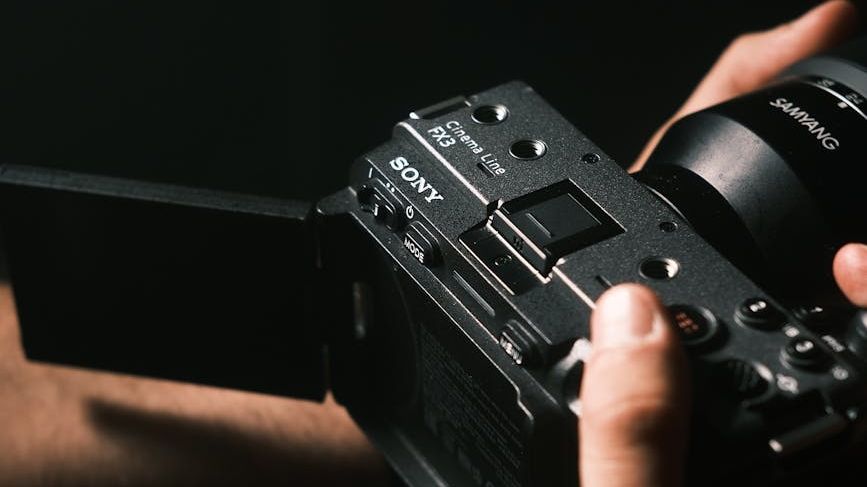
In the professional video industry, 2026 marks a curious milestone for the Sony FX3. Originally released in 2021, the camera is technically entering its fifth year on the market. In a tech landscape where hardware usually refreshes every three years, the FX3 is an anomaly—a camera that remains a top-tier choice for everything from indie features to social media content, even as competitors have aggressively closed the gap.
As we look at the current landscape, the question isn’t whether the FX3 is “old,” but whether its hardware limitations are finally starting to outweigh its legendary reliability.
The “Open Gate” Debate: Utility vs. Hype
The loudest argument for an FX3 successor usually centers on Open Gate recording. Competitors like Panasonic and Blackmagic have made “full-sensor readout” a standard feature, allowing creators to capture a 3:2 or 4:3 image that can be cropped for both vertical and horizontal platforms.
However, a nuanced look at professional storytelling suggests that Open Gate is often more of a marketing “checkbox” than a narrative necessity. As we have discussed in previous articles, true cinematography is about intentionality. When you compose a frame, you are choosing what to include and—more importantly—what to exclude.
While Open Gate is a convenient “safety net” for social media deliverables, it can lead to lazy composition. If a camera is a tool for storytelling, the FX3’s 16:9 native 4K readout remains perfectly aligned with the cinematic standard. For the filmmaker who “listens” to their scene and commits to a frame, the lack of Open Gate isn’t a technical failure; it’s a non-issue.
The Firmware Strategy
Sony has effectively delayed the need for an “FX3 II” through unprecedented software support. The recent Version 7.0 firmware has brought the “BIG 6” menu system from the $25,000 Sony Burano down to the FX3.
By adding features like shutter angle, DCI 4K, and 1.5x anamorphic de-squeeze long after launch, Sony has treated the FX3 as a platform rather than a disposable product. This approach bridges the gap between journalism—where speed and reliability are everything—and art, where technical precision allows for creative freedom.
Where the Hardware Shows Its Age
Despite the software “transplants,” there are physical limitations that no firmware can resolve. If the FX3 is truly “due” for an update, it is likely because of these three pillars:
* Internal ND Filters: For solo operators moving between locations, the lack of internal NDs remains the FX3’s biggest point of friction.
* The AI Processing Gap: Newer Sony bodies feature a dedicated AI chip for advanced subject recognition. While the FX3’s autofocus is still world-class, it lacks the “predictive” intelligence found in Sony’s 2025/2026 releases.
* Media Standards: As file sizes and bitrates climb, the industry is moving toward faster CFexpress Type B standards, while the FX3 remains on the smaller, often more expensive Type A cards.
The Verdict
From a purely technical standpoint, the FX3 is “long in the tooth.” It is built on architecture that is now half a decade old. For creators who demand the latest AI tracking or the physical convenience of internal NDs, the wait for an “FX3 II” is justified.
However, from a practical standpoint, the FX3 remains a “Netflix-approved” workhorse. It doesn’t overheat, it fits on any gimbal, and its 12.1MP sensor is still the king of low-light performance.
We become better creators when we stop talking about what our cameras can do and start talking about what we do with them. By that metric, the FX3 isn’t “due” for anything—it’s already there.

Plaats een reactie