
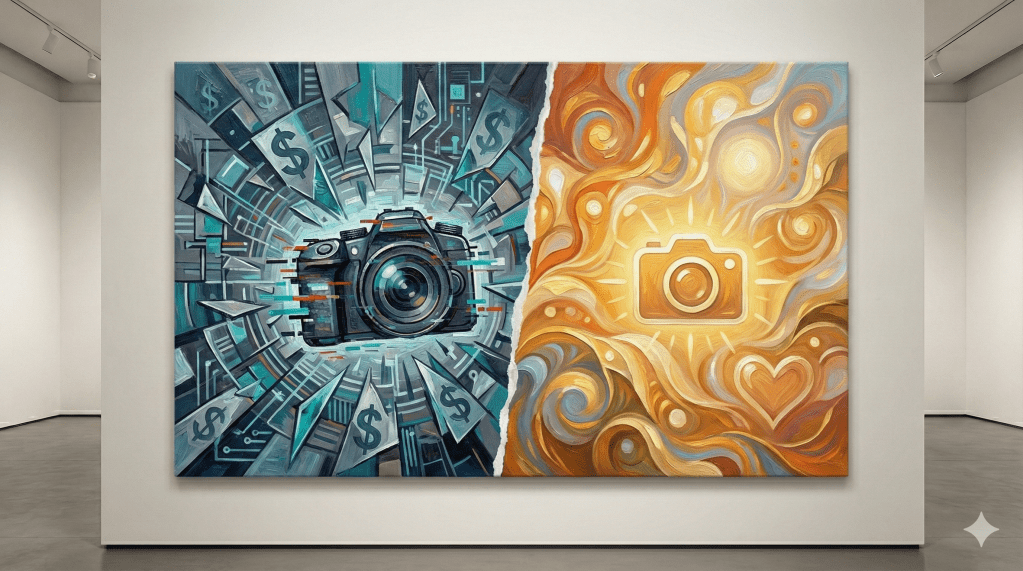
The landscape of digital imaging has reached a tipping point. With the market arrival of the Sony a7V and the Lumix S1II, the boundary between an “enthusiast” device and a professional workhorse has effectively vanished. While these cameras are engineering marvels, a cold look at the data suggests they may be outgrowing the very demographic they claim to serve. From an objective market perspective, we are witnessing a migration of flagship technology into the €2.500–€3.200 bracket. For the creator, the question is no longer “what can this camera do?” but rather, “at what point does the gear start getting in the way of the goal?”
The Specification Arms Race
In 2026, features that were once reserved for high-end cinema or sports photography are now marketed as “standard.” However, this innovation comes with a heavy price floor:
The Lumix S1II: At approximately €3.000, this device offers 6K Open Gate and internal ProRes recording. These are specific, high-level production requirements that many enthusiasts—focused on the joy of the process rather than a client deadline—may never actually deploy.
The Sony a7V: Positioned as the “basic” full-frame model, its launch price near €3.000 moves it out of reach for many hobbyists. While its AI-driven autofocus and stacked-sensor performance are industry-leading, they represent a professional-tier investment.
The Complexity Gap
A camera should facilitate a dialogue between the maker and the tool. When a device becomes overly complex, that dialogue is often interrupted by technical troubleshooting.
We become better creators when we stop talking about what our cameras can do, and start talking about what we do with them.
For a journalist or a freelance videographer, deep menu systems and specialized codecs are technical necessities. But for the amateur hybrid creator navigating the transition to creative passion, these “selling points” can become noise. The financial barrier is also significant: if the camera body consumes 80% of a budget, the dialogue with high-quality lenses—the true soul of an image—is silenced.
Objective Comparison: Market Positioning vs. Real-World Use
Professional Profile:
- Primary Driver: ROI & Delivery
- Real-World Use: Needs the a7V/S1II for speed, reliability, and high-bitrate client deliverables.
Enthusiast Profile:
- Primary Driver: Creative Passion
- Real-World Use: Needs intuitive ergonomics and value that allows for lens investment.
Reclaiming the Conversation
Marketing hype, particularly the current obsession with specs like Open Gate, can often obscure what truly serves a creator’s work. Objectively, the Sony a7V and Lumix S1II are professional tools that have inherited an “enthusiast” label.
The best camera isn’t the one with the most checkboxes; it’s the one that stays out of the way of the story. As we move forward, the most important conversation isn’t about the sensor—it’s about the frame.

Plaats een reactie